Note
Gross National Distress is a research-led inquiry initiated by 3l33(eric lee) that revisits the phenomenon of mass psychogenic illness in the factories of Singapore. The project situates these metaphysical disruptions against the aggressive economic and political backdrop of the nation’s rapid industrialisation.
The first half of this website provides the critical framework and motivations behind the research. A primary focus is the state’s promotion of “productivity consciousness”—a strategic campaign designed to internalize industrial discipline within the workforce. This historical foundation informs a series of works that both obliquely and directly reflect on the structures governing factory life.
Drawing from literary sources that challenge traditional perceptions of labour, the project also foregrounds the human element. It features oral histories and personal recollections from three individuals—Zainab Mahmood, Nadia Florman, and Azfar Sidek—whose lived experiences offer varying narratives and sentiments towards industrial history.
The second half of the site serves as a laboratory for audiovisual experimentation. Through the moving image and multidisciplinary art-making, these works translate the research into a sensory experience. These experiments are not merely supplementary; they are essential interventions designed to facilitate a more coherent, immersive vision of a workforce navigating the pressures of the "graveyard shift."
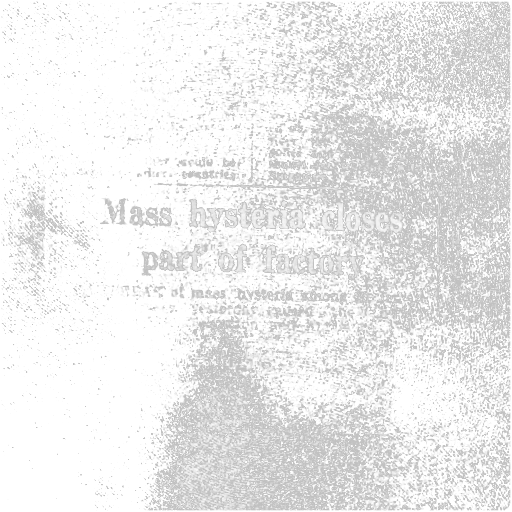

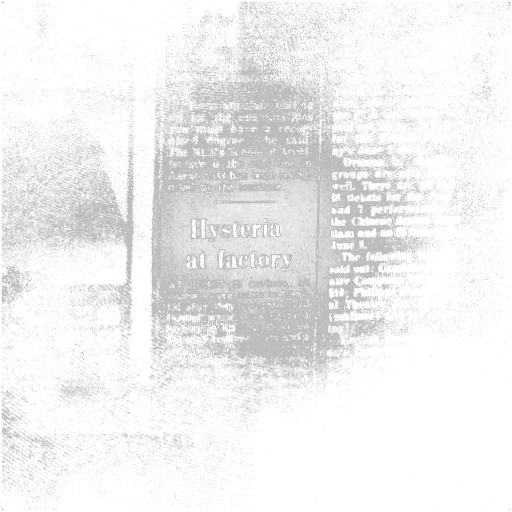
The starting point of this research is a haunting image of docility transformed: cackling, screaming, and resisting the relentless flow of the assembly line. In early 1973, female workers at a television assembly plant in Singapore were struck by episodes of Mass Psychogenic Illness (MPI). While some went into states of trance, others succumbed to fainting and fits of screaming. This resulted in the view that these episodes were a latent, somatic solution to factory tensions that had no other outlet.
At the time, Singapore was a burgeoning nation aggressively implementing an industrialisation programme designed to entice foreign investment. The state’s primary offering was a disciplined, low-wage labour force. To ensure the success of this strategy, policies were enacted that prioritised corporate incentives over labor rights, aiming to solve mass unemployment through labor-intensive manufacturing.
For this economic engine to function, workers were required to internalise what the state termed “productivity consciousness.” Deemed vital for national survival, this mindset demanded the maximization of output and the ruthless elimination of "waste" and "inefficiency." Tasked with reshaping the very psyche of the workforce, unions became instruments of this behavioral shift. In response to this history, I have devised a web of methodologies such as recontextualising archival imagery, reconstructing historical fragments, and conducting oral interviews.
This website introduces the reader to three core concepts that map the convergence of labour and the subconscious:
- Productivity Consciousness: A term coined by the National Productivity Board of Singapore to instill an acute awareness of labour efficiency. We examine the specific strategies used to embed this consciousness within the management and the rank-and-file.
- Mass Psychogenic Illness (MPI): Using a socio-psychological framework, this research investigates these "outbreaks" not as medical failures, but as meaningful responses to the industrial environment.
- Gross National Distress (GND): Here, the research takes a speculative turn. The term was originally used facetiously by C.V. Devan Nair (then Secretary-General of the NTUC and later President of Singapore) to describe the "distress" that would be felt if GDP growth failed to track with wages.
The heart of this project lies in the relationship between Productivity Consciousness and MPI. I propose that these findings be categorised under the reclaimed banner of Gross National Distress. Through the lens of artistic practice, GND posits that MPI was a pioneering, albeit involuntary, method for expressing unvoiced tensions.
By synthesizing research on negotiation, imagination, and presentation, GND evolves into a "living organism" that cultivates expressions of the unspoken.
This site consists of 2 components:
- Industrial Realisations - Experiences of a Friend: These sections address the primary research inquiries and historical findings.
- Gross National Distress - Graveyard Shift Girls: These sections present these inquiries through a series of experimental audiovisual works.
Industrial realisations and the transformation of social political landscapes
This section began with curiosity about the industrial history of Singapore. Knowledge on this subject matter is unavoidable especially in relation to the research interests.
Being a former colony of the British empire, Singapore was never envisioned as an independent state. Despite being a hub of economic activity due to its location and port, it was deemed economically unviable to rely solely on those factors. One of the proposed solutions was merger with Malaya. Malaya which became Malaysia in 1963 attained full independence from the British colonial government in 1957. The merger was a failure and after two years,1963-1965, Singapore became an independent nation state.
In April 1961, the governing body of Singapore had already put into motion the State of Singapore Development plan 1961-1964. The goals of this plan were to create jobs for Singapore’s growing population, while expanding the economy through industrialisation.
There was near consensus on expediting the industrialisation process as Euston Quah points out that “at the time, nearly all contemporary theories of economic development were recommending rapid industrialisation as the first step towards economic growth. Therefore, the decision of Singapore to focus on industrialisation seems like a step in keeping with this conventional counsel.”1
Internally, mass unemployment was an issue that needed to be solved. This was due to a rapidly growing population after the war that ended in 1945. According to Lee Soo Ann, “the post-war scene was consequently dominated by fears of how a rapidly growing population could be accommodated on a small island, more specifically in terms of catering to the needs of a high proportion of dependents and to the subsequent desire for employment by these same dependents when they grew up.”2 This notion is further corroborated in the book, Theatres of Memory.
“To policymakers, socio-economic issues such as population growth underpinned the political turmoil and industrial unrest in post-war Singapore.”3
This led to the government adopting industrialisation as a means to boost employment opportunities and economic growth. Unemployment was not seen as a problem before the war because migrants saw their stay in Singapore as temporary. However, as workers decided to settle down and children were being born in the country, the idea of returning seemed less feasible. Individuals who first came as transient workers were starting to embrace Singapore as their newly adopted home.
In addition to acquiring capital, Singapore had to gain expertise and technical knowledge of manufacturing from nations that were already developed. This mostly meant the western states.Three non-governmental organisations concerned with development - the International Bank for Reconstruction and Development(IBRD) or World Bank, the Colombo Plan for technical cooperation and the United Nations divisions for development and technical expertise - were important to Singapore as these organisations emphasized economic and technical cooperation.
The UNDP and Colombo plan were keen to prevent Singapore from turning into a communist state and this led to experts from these organisations recommending capitalist forms of development. The proposals of the World Bank did not prove to be of much use. The United Nations Division for development and technical expertise was the most effective in helping to devise Singapore’s economic plans.
The Dutch economic advisor, Albert Winsemius, who was part of the UN mission survey team is often credited with being one of the brains behind Singapore’s economic success. His report A Proposed Industrialisation Programme for the State of Singapore(The Winsemius Report) acted as the main economic plan in the 1960s in tandem with the original development plan. Albert Winsemius emphasized the need for a crash programme to alleviate the immediate issue of unemployment because the ten year industrialization programme which could not be expected to immediately create its full impact.
He was convinced that Singapore had to manufacture for the global market rather than the local. This included the western nations and other parts of Asia. In light of this proposal, the Economic Development Board was set up in 1961 to seek new markets while also persuading foreign capital to invest. Lee Soo Ann highlights the importance of the EDB which had two primary functions - “to make a success of industrial promotion and to be the instrument of the government’s direct participation in industrial activity.”4 This was in line with another proposition by Albert Winsemus which was that industrialisation had to be led by foreign capital instead of state capital. He believed that the state’s main role was to engineer a conducive environment for the stabilisation of labour and capital. He was optimistic as he mentioned in his report that “Singapore has the basic assets for industrialisation. Her greatest asset is the high aptitude of her people to work in manufacturing industries. They can be ranked among the best factory workers in the world.”5
With this in mind, Singapore was ready to propel itself into the world market by transforming parts of the country into industrial estates. The first area to be completely transformed was Jurong. Originally a “swampland” that was “littered with villages and crocodile rivers”, Jurong laid the foundation for how Singapore would accomplish the goals of its industrial plans. Jurong was a huge undertaking as the government had no experience in building an industrial zone from almost nothing. According to Loh Kah Seng, the project could only be accomplished with the help of a Japanese engineer, Y. Yanagisawa and his team of six who endorsed the prospects of heavy industry and believed in its success.
Loh Kah Seng also mentions that “Jurong took shape according to a system of zoned development”6 which was the demarcation of a piece of land for one type of development only. Heavy industry that comprised iron, steel works, shipyards, chemical and petrochemicals was to be sited along the coasts while light industries such as food, paint and garments could be located closer to the housing areas of the first neighbourhood. Factories were also being built in other residential areas to accommodate the wider population. These factories resembled the social housing flats built by the HDB(Housing Development Board) and housed mostly light industries. This strategy effectively tapped into the labour pool that was available in these housing estates. Women workers were now initiated into the workforce as they made up the bulk of labour in these light industry factories.
Not only was the physical landscape altered to pave the way for these industrial aspirations, the social political landscape was also due for a makeover to suit the new era of industrial and capital relations.
Besides economic advice, Albert Winsemius also recommended two political suggestions to the Prime Minister.
The first being to “eliminate the communists”.
“As an economist, I’m not interested what you do to them, you can throw them in jail, you can throw them out of the country, you can even kill them.”7
“If you don’t eliminate them in government, in unions, in the streets, forget about economic development. This part better be taken out but for history’s sake you don’t care to do it.”8
At this point in Singaporean history, there was also a lot of labour unrest due to exploitation of the working masses by employers of the time. Trade unions had to fight tenaciously to achieve concessions for workers. The climate of Singapore’s social and political landscape matched its sweaty weather due to “militant unionism” as retroactively claimed by the government. These “fighting machines”9 were also gaining traction in the political scene.
On his first visit to Singapore as part of the United Nations survey mission, Albert Winsemius claimed that, “It was bewildering. There were strikes about nothing. There were communist-inspired riots almost everyday and everywhere.”10
At the time, the People’s Action Party was composed of two factions: the leftists and the moderates. Members of the left leaning faction were accused of having ties to the communists and consistently blamed for inciting disruptive action. This resulted in the left faction forming a new party, Barisan Socialis. The two competing political factions formed different associations to address labour concerns. The left leaning Barisan Socialis which was led by Lim Chin Siong formed SATU(Singapore Association of Trade Unions) while the “moderate” People’s Action Party formed NTUC(National Trade Union Congress). The NTUC was under the care of C.V.Devan Nair.
Simultaneous to was this little thing called “Operation Coldstore”. The main goal of this operation was to “cripple communist activity”. This was to supposedly bring order and stability to the state because it was believed that communists were responsible for inciting unrest amongst workers and students.
Alleged “pro-communists” were rounded up under the Preservation of Public Safety Ordinance(PPSO). Members of the Barisan Socialis including Lim Chin Siong bore the brunt of this crackdown. SATU was also banned as a result of this crackdown leaving NTUC to be the sole association for labour concerns. This was of course not by coincidence that the fall of Barisan Socialis and SATU were simultaneously orchestrated.
Albert Winsemius laments that “it’s to a certain extent a pity that these people, enthusiastic people with a feeling for their fellow human beings, with high intellectual, often organisational capacities got lost for Singapore.”11
The Charter for Industrial Progress was then put in place in 1965 to ensure that there was a “common conviction that the future and well being of the people of the State depends primarily on the continuing expansion of its economy through accelerated industrial growth.”12
Under “Negotiations and Arbitration” of “A Productivity Code of Practice for Trade Unions and Manufacturing Industries” , it is mentioned that “In case of disputes, both the trade union and employer will refrain from taking any industrial action and will endeavour to refer jointly to arbitration any dispute which cannot be settled through direct negotiation or conciliation.”13
Considering how the ruling party is called People’s Action Party, it’s quite amusing how “action” is not encouraged in industrial settings. This has also clarified something for me. The absence of “action” tends to render unions somewhat invisible.
Under “Cooperation Machinery”, joint productivity consultative councils were set up to provide guidance and promotion of productivity to enterprises employing over fifty employees. The council was represented by four individuals from management and labour respectively. Through this initiative, cooperation becomes intrinsic to the infrastructure of labour-management relations.
Albert Winsemius also famously says, “If the cooperation (between the unions, employers and state) does not come about, labour will suffer for it. Capital can go to other countries as it has already done. Enterprise can escape as it has done in the last few years.”14
In 1968, two labour laws were passed. The employment act and the industrial relations act.
The employment act standardised terms and conditions of employment. According to the TV programme created by the Singapore Broadcast Corporation in 1988, Diary of a Nation, the employment act entailed
-
Curtailing the right of unions to strike
-
Giving the employer sole rights to hire and fire
-
Increasing working hours
-
Reducing of overtime, leave and retirement benefits
The Industrial Relations (amendment) Act excluded certain issues such as recruitment, dismissal and retrenchment, from collective bargaining and specified new procedures for labour negotiation and conflict resolution. Promotion, transfer, recruitment, retrenchment, dismissal, reinstatement and allocation of duties are made non negotiable in favour of the employer.
The unions’ agreement to these new constraints in the employment act and industrial relations act helped create a framework for industrial peace. Survival was also a major selling point. In this sense, workers and their representatives had to cooperate for their own well being and interests.
The second primary thing that Albert Winsemius advised the Prime Minister on was to “let (the statue of) Stamford Raffles stand where he stands.”15 Stamford Raffles is a British national who is credited as being the founding father of modern Singapore. The reason for this is so “Singapore accepts colonial heritage and manifestation of goodwill and trust between Singapore and its colonists and other countries in the west. Singapore was not taking the nationalist approach.”16
This was potentially tricky because the “fabian socialist” governing body had to balance residual anti-colonial tendencies with this supposed embrace of “colonial heritage”. The task of nation building was just as crucial as the growth of industry and it was a fragile task due to the different political factions. As a nation that was hoping to be librated from past oppressive forces, embracing “colonial heritage” would not reflect well against the climate of revolutionary sentiments.
Perhaps S Rajaratnam who was the Minister of Labour stated the position of the government quite aptly as he addressed the implementation of the Industrial Relations (amendment) and employers act in 1968.
“Old slogans, old cries, old attitudes of twenty years ago have become irrelevant. The major objective to which all other issues should be subordinated is this. It is not the redistribution of wealth but the creation of wealth that should be our major and relentless concern.”17
1. Quah, Euston et al. Albert Winsemius and Singapore: Here It Is Going to Happen. World Scientific, 2022.
2. Lee, Soo Ann. Industrialization in Singapore. Camberwell, Vic. : Longman Australia, 1973.
3.Loh Kah Seng, et al. Theatres of Memory: Industrial Heritage of 20th Century Singapore. Ethos Books, 2022.
4. Lee, Soo Ann. Industrialization in Singapore. Camberwell, Vic. : Longman Australia, 1973.
5. United Nations, A Proposed Industrialisation Programme for the State. United Nations Commissioner for Technical Assistance, Department of Economics and Social Affairs 1963.
6. Loh Kah Seng, et al. Theatres of Memory: Industrial Heritage of 20th Century Singapore. Ethos Books, 2022.
7. Singapore Oral History Unit, interview with Albert Winsemius, 30 Aug-3 Sep 1982.
8. Singapore Oral History Unit, interview with Albert Winsemius, 30 Aug-3 Sep 1982.
9. NTUC (National Trade Union Congress) May Day Rally, 1968.
10. Tamboer, Kees, Albert Winsemius: ‘founding father of Singapore’, 1996.
11. Singapore Oral History Unit, interview with Albert Winsemius, 30 Aug-3 Sep 1982.
12. Woon Kin Chung, and Loo Ya Lee. 50 Years of Singapore’s Productivity Drive. World Scientific, 26 Dec. 2017.
13. Woon Kin Chung, and Loo Ya Lee. 50 Years of Singapore’s Productivity Drive. World Scientific, 26 Dec. 2017.
14. United Nations, A Proposed Industrialisation Programme for the State. United Nations Commissioner for Technical Assistance, Department of Economics and Social Affairs 1963.
15. Singapore Oral History Unit, interview with Albert Winsemius, 30 Aug-3 Sep 1982.
16. Singapore Oral History Unit, interview with Albert Winsemius, 30 Aug-3 Sep 1982.
17. Diary of a Nation (SBC 1988) - 15 August 1968: Changes in Labour Laws.
Novelty of factory labour
I had the idea to show former factory workers a state sanctioned short film directed by filmmaker Wee Li Lin in celebration of a generation of workers labelled as the Merdeka(liberation) generation. The intention was to consider how they felt about it and whether the film reflected their experiences or otherwise. The short film portrays a worker sacrificing her studies to generate income for her family through factory labour.


Like many other things in the research initiator’s life, that idea did not materialise. However, I did manage to show this to the main researcher of the book Theatres of Memory, Loh Kah Seng.
He responded by pointing out the fact that workers who were mostly women felt more excitement than dread about entering the workforce,
“in my interviews, what came out most was the excitement of working in a factory - which is opposite of the initial reaction in the film. There would have been women who had to forgo their studies to work but they would have been the minority. Joining a factory and getting regular wages was very new and exciting in the 60s and 70s. Economic power and social power.“
Former factory worker Zainab Mahmood who is part of the merdeka generation speaks about assembling radios for the Dutch company Phillips when she was 17. She worked at the factory for 13 years and then took a break to provide care for her firstborn before working at other companies like Seagate and Hitachi. At Seagate, she was part of the quality control team that ensured the functionality of the hard disks. She shared how she was happy at work because she was with her friends. She also mentioned that time went very fast because the work was very busy and intriguing to her.
Zainab’s enthusiasm is not not entirely shared by Nadia Florman who worked at the factories on a contractual basis and was not permanent staff. She is also not part of the Merdeka generation and worked at the factories during the early 2000s. She worked in the factories sporadically during her school holidays and when she neded the income.
Nadia Florman mentions how her mother was “bored out of her mind” at home and found factory work to be a productive way to have some time away from home. Having acquired a degree of financial autonomy, her mother could also provide financially for the children sometimes.
This point is also mentioned by Loh Kah Seng as he states that “for many of these workers, assembly lines and production floors were places of opportunity and a social life beyond the household. This helped transcend the daily monotony of routine assembly-line production.”1
Here are some advertisements in newspapers in the 1970s at the time calling for for female workers to join the factory workforce.


In the 1970s, due to rapid industrialisation and accumulation of foreign capital, Singapore was able to expand its industrial base to create new sources of employment. The strategy worked so well that women were also being coerced to join the labour market.
In addition to work at the factory, domestic labour was still very much part of most women’s lives. Work in the household was now an addition to work in the commercial space. Certain commercial spaces in the manufacturing industry sought after women more than men. One could say that these commercial spaces would not be able to exist to the extent that they do without women.
Women ineivitably dominated certain sectors of manufacturing as emphasized by Linda Lim, “the exclusive demand of electronics multinationals for female labour induced a new supply of such labour, facilitated by host country conditions and host government policies in a number of ways”.2 In Singapore, flatted factories which were located in housing estates gave these (Multinational Corporations)MNCs “access to a ready pool of labour”. Wages for women were also lower than men because women were seen as secondary income earners. Zainab Mahmood reaffirms this notion as she states that income from factory labour was not enough to sustain a household and functions as extra allowance for the family.
Under patriarchal structures of control, socialised characteristics such as patience and deference that are often misattributed to women were also viewed to be more productive traits for the manufacturing industry.
According to Vivian Lin, “the concentration of women in electronics is no mere coincidence”, because of certain “feminine traits” that women inherently possess.
“Women have nimble fingers, agile hands, and keen eyesight. They are considered to be more efficient and careful than men. Their dextrous skills are believed to be derived from experience in needlework and other domestic chores; therefore they are considered well suited for labor-intensive jobs that focus on fine detail.”3
Aihwa Ong points out the supposedly symbiotic relationship between electronics manufacturing and female factory workers
“Within international capitalism, this notion of women's bodies renders them analogous to the status of the computer chips they make. Computer chips, like "oriental girls," are identical, whether produced in Malaysia, Taiwan, or Sri Lanka. For multinational corporations, women are units of much cheap labor power repackaged under the "nimble fingers" label.”4
Firms also chose female workers over male workers because the docility of female workers makes them more productive workers while also reduces the risk of labour disruptions. Chung Yuen Kay mentions the two forms of pressure as factory operators faced as they performed their required tasks: insecurity of their position at work and the lack of agency.
“The rules and regimentation, the depersonalisation, fulfilled symbolic and material purposes of ‘managing’ people in accepting the ‘facticity’ of social control within the factory.”5
In a similar vein to this notion, Aihwa Ong proposes that the “induced docility of factory women sprang from a practical assessment of their insecure position within the labour market and their powerlessness to change it.”6
In addition to gender, MNC firms also showed preference for hiring certain communities over others. In one case, this was due to the reason that Malay girls were considered to be “easier to manage” than choosy, difficult, “trouble-making Chinese girls”7, and thus often made more productive workers.
The operators would also leave school around the age of fifteen to join wage work and this according to Chung Yuen Kay would make them more susceptible to regimentation. The continuity of discipline implemented by the school system also benefits the factory. In this way, non-autonomous behaviour functions to serve as a means of productivity.
Other strategies such as fringe benefits were also initiated to help labour-management relations and indirectly improve productivity. These benefits were mostly “feminized” to supposedly hold the interest of the workers. Linda Lim raises the point that, “many fringe benefits are also geared towards “feminine” interests of the vast majority of the workers, for example, cooking classes, dance lessons, make-up and fashion classes, even beauty contests.”8
“Industrial indoctrination” and “anxiety reduction” orientation programmes were also meant to shape worker’s attitude while also providing “care”. Certain American companies also have a “counselling and human relations officer” to deal with the issues faced by the workers. Japanese companies often had assemblies before each shift where workers would join together in singing the company song, shout slogans and do mass exercises and calisthenics. Linda Lim also mentions the mechanism of cooperation that is the practice of Singapore unions.
“From the employers’ point of view, it was preferable not to have unions at all. Where unions existed, government controlled unions such as those in Singapore were to be preferred.”9
Firms were also able to “win the hearts” of workers who did not believe that the union would be effective in providing adequate support. The supposed “symbiotic relationship” between the state and the trade unions might have been a possible reason to arouse the suspicion of workers.
“In one particular company, workers rejected forming a union four times because workers are paid higher wages and treated well so morale is high.” It was speculated that “workers recognise government-sponsored unions for what they are and reject them because they have no credibility as workers’ representatives.”10
Workers were also put into precarious positions due to the employment act. Firms could decide how to manage efficiency through the hiring or firing of workers. Some took advantage of the financial crisis of 1973 to retrench surplus labour.
“The recession fortuitously provided them with an “excuse” to lay off workers who would have been made redundant anyway by the introduction of automation(capital-labour substitution), new products and processes, and shifting of labour-intensive operations from Singapore to cheaper neighbouring countries.”11
Despite entry into modernity through the industrialised world, workers were still subjected to similar hierarchical systems based on patriarchal systems and assumptions of gender biases.
“All multinationals accept traditional attitudes towards women when they justify giving women lower wages and expecting greater deference to authority and conscientiousness in work from them. Even the “modern” labour practices and cultural influences introduced by multinationals are often tools for the exploitation of women in the factory, as manipulation of so-called “feminine” habits and proclivities in ways which enable the employers to extract higher output from them at lower wages.”12
1. Loh Kah Seng, et al. Theatres of Memory: Industrial Heritage of 20th Century Singapore. Ethos Books, 2022.
2. Lim, Linda. Women Workers in Multinational Corporations. 1978.
3. Lin, Vivian. Health, Women’s Work, and Industrialization. 1986.
4. Ong, Aihwa. “The Production of Possession: Spirits and the Multinational Corporation in Malaysia.” American Ethnologist, vol. 15, no. 1, 1988.
5. Chung, Yuen Kay. Negotiating Target. 1 Jan. 1988.
6. Ong, Aihwa. “The Production of Possession: Spirits and the Multinational Corporation in Malaysia.” American Ethnologist, vol. 15, no. 1, 1988.
7-12. Lim, Linda. Women Workers in Multinational Corporations. 1978.
Productivity as a national concern
Productivity at the most basic level is defined as the relationship between output and input. Before trying to understand productivity consciouseness, I needed to first understand Singapore’s relationship with productivity. Due to the state’s stance on wealth creation, productivity played a key role in achieving that objective.
According to Woon Kin Chung and Loo Ya Lee,
“The determinants of productivity and the reasons for its importance apply as much at the enterprise level as they do at the economy level. High productivity growth enables an enterprise to price its products competitively, sell more and enlarge its market share. As a result, its wealth will increase over time, which means that higher profit can be made and higher wages can be paid at the same time without compromising profit.”1
Since there is a limit to which labour can grow, labour productivity is critical to GDP growth in the long run. Small countries such as Singapore rely heavily on the productivity of the labour force because of its limited resources. This is why Singapore has initiated several policies and plans to ensure the continued growth of productivity levels.
As mentioned in the Winsemius Report, “since the export industries will be producing quality products for the international market, the investment policy will have to aim at high productivity” and this could be achieved “through the usually long process of increasing productivity or through the introduction of shift systems.”2
This might have kickstarted Singapore’s love affair with productivity which began in 1967 after the National Productivity Centre was established. The centre had five goals.
- To promote productivity consciousness in management, trade union leaders and workers.
- To provide training facilities for management and trade union personnel in all productivity techniques, including general management, personnel management, supervisory training, management accounting, and industrial engineering.
- Foster the further development of good industrial relations by training.
- To render management consultancy services in the fields of general management, personnel management, supervisory development.3
Under the promotion programme section of A Productivity Code of Practice, Trade unions are to undertake the task of promoting “productivity consciousness” among members, thereby minimising absenteeism and practising economy in using raw materials and other production facilities. Productivity consciousness seems like an etiquette or mode of behaviour more than a mindset. Maybe it started out as etiquette and shapeshifted into a mindset.
Does productivity consciousness also obstruct the formation of other consciousness such as class and gender or does it operate in parallel? Apparently, workers were “disenchanted with productivity” in 1971 due to the National Productivity Centre not delivering what The Charter for Industrial Progress and the Productivity Code of Practice promised. One wonders if this meant that workers had not fully grasped “productivity consciousness” at this point.
The National Productivity Centre which was originally under the care of the Economic Development Board was now under the watch of the Ministry of Labour. With the Ministry of Labour now in charge, productivity was now seen as an issue that concerned labour. The board consisted of tripartite cooperation between trade unions, employers and the government. This cooperation is often mistaken as subservience to the whims of capital which it is.
The first National Productivity Campaign was launched in April 1975 by S.Rajaratnam who was the Minister of Foreign Affairs at the time. The catchy slogan for this campaign was “Productivity is Our Business”. These ideas were transmitted through television and radio, seminars and paraphernalia such as pamphlets, key chains, posters and car decals.
The focus of the National productivity Board then shifted towards promotion of productivity in the 1980s.This was when the board spearheaded and conceptualised productivity through a long term productivity campaign. Policies from this decade are largely dictated by the Economic Development Plan for the Eighties. This period was also deemed to be the second industrial revolution for Singapore. The first took place in the 1960s and focused on low skill wage labour employment. This strategy also relied heavily on foreign direct investments.
There was a growing concern towards the “human aspects” of productivity. However, this might not be what one expects of the term “human aspect”. The great concern was to create conditions for capital intensive investments that required advancement in technology and automation. The workforce had to adopt “new skills, right attitudes, develop good labour management relations and work well in teams.” The “human aspect” had to cater to the needs of potential investments from foreign firms. Unfortunately for the state, two reports based on the findings of the Ministry of Labour and Economic Development Board revealed several problems about the attitude of the Singaporean worker. There was work to be done with regards to the attitude and mindsets of the workers.
Job hopping seemed to be the top complaint of companies. Managerial and supervisory authority undermined for fear of causing resignations as a result of disciplining workers. Workers were also reluctant to work overtime. Nightshift was also avoided because of health concerns and missing out on their favourite television programmes(this is my favourite). Companies found that automation was not feasible because machines had to be operated continuously around the clock.
The workers were essentially developing mindsets that were to their own interests. These traits began to cultivate a culture of “individualism” in the Singaporean mind. This individualism did not however facilitate positive competition or innovation. It catered more towards the absolving of responsibility from the individual who was more than happy to do the bare minimum. In its quest to raise productivity, the state was met with resistance from the attitudes of the workers. One starts to suspect that productivity consciousness is like a piece of clothing, more specifically like a uniform, only worn during occasions of socialised indoctrination. The Singaporean knows how to wear it at opportune times and take it off for the sake of self-interest.
This had to be corrected as the worker had to be convinced to adopt a better mindset if there was to be any progress beyond Singapore’s reliance on foreign capital.
During the National Day Rally in 1981, the then Prime Minister of Singapore, Lee Kuan Yew, made claims that “ the heart of the worker…that’s what productivity is about.”4 Productivity was a concept that the Singaporean mind had to digest and put into practice. During the launch of Productivity Month in November 1982, Lee Kuan Yew again stressed the importance of labour-management relations.
“All successful management have in common a man-centred philosophy. Healthy labour-management relations and good work attitudes amongst all workers depend on good management philosophy in which care and concern for the workers are high in management priorities. It is more important for management to have sincere concern for their workers than to provide increasing employee benefits.”5
A nationwide productivity movement was launched in 1981 to aid the development of a productive workforce, personnel management and industrial relations. This was intentionally labelled as a movement instead of a campaign because it was intended to be continuous.
To make the message friendlier or palatable, a mascot was conceived to give an identity to the movement. This mascot took the form of a bee and was named “Teamy”. A bee was selected because of its association with positive traits such as high productivity and teamwork. Simultaneously, having found no solution for its reliance on foreign capital, Singapore also began to look towards Japan as a source of inspiration in the 1980s.
In commemoration of the opening of the new National Productivity Board building in 1986, a mural with the eight doctrines of productivity was presented by the Japanese Productivity Centre.
-
Productivity symbolises one of the highest values that mankind should persistently pursue
-
Productivity is a concept which signifies a creative culture and brings about the material and spiritual welfare of the human race
-
Productivity helps to create peace, strengthens democracy, and generates co-operative efforts among a country’s government, business and, labour leaders
-
Productivity represents a basic code of behaviour that should govern the conduct of each and every kind of group or organisation, be it political, governmental, economic, social or familial
-
Productivity enhances the potential of human beings
-
Productivity restores the sanctity of labour
-
Productivity represents a model for individual growth and development
- The basic concept of productivity is the vehicle by which the fruits of improved productivity lead to expanded employment opportunities and are fairly distributed among management, labour, and the consumer6
The Japanese managed to devise their own management systems that were quite different from the west and these systems seemed to have inspired higher productivity levels among the workers. This was a source of inspiration to the ruling body of Singapore. I believe that these “eight basic doctrines” are the true tenets of productivity consciousness but the state was having a hard time trying to inculcate these values into Singaporeans. The inability to do so might have resulted in the tightening of social control. This could have taken shape in certain ideas like “Asian Values”.
1. Woon Kin Chung and Loo Ya Lee. 50 Years of Singapore’s Productivity Drive. World Scientific, 26 Dec. 2017.
2. United Nations, A Proposed Industrialisation Programme for the State. United Nations Commissioner for Technical Assistance, Department of Economics and Social Affairs 1963.
3-4. Woon Kin Chung, and Loo Ya Lee. 50 Years of Singapore’s Productivity Drive. World Scientific, 26 Dec. 2017.
5. National Day Rally Speech, 1981.
6. Woon Kin Chung and Loo Ya Lee. 50 Years of Singapore’s Productivity Drive. World Scientific, 26 Dec. 2017.
